
You Don't Have to Carry This Alone. How to Find the Right Grief Counselor
- Jaclyn Hoffman
- 5 days ago
- 13 min read

When grief feels too heavy to carry alone, reaching out for help isn't a form of weakness. I believe it's wisdom.
But here's what most people don't realize: not all grief counselors are created equal. Some will rush you through stages that don't actually exist. Others will push you towards "closure" that feels artificial.
And many will miss the fact that your grief isn't a problem that needs fixing. It's a natural response to loving someone deeply.

If you're searching for grief help, you deserve more than textbook advice. You deserve someone who sees your grief as sacred, honors your timeline, and helps you move forward (not on) with your loss.
This guide will show you exactly how to find a grief counselor who gets it and how to know when you've found the right fit.
Key Takeaways
Grief counseling isn't one-size-fits-all. The right counselor will honor your unique experience, not force you into predetermined stages or timelines.
Specialization matters more than credentials alone. A grief counselor with lived experience or specialized training in bereavement offers deeper understanding than general therapy.
You're allowed to interview your counselor. Ask about their approach to grief, their beliefs about "moving on," and whether they integrate holistic or spiritual tools (if either vibe with you).
Red flags include rushing your healing. If a counselor sets timelines, pathologizes your emotions, or avoids talking about your person, keep looking.
The right grief support feels like permission to be exactly where you are. You should feel seen, not fixed.
Why Finding the Right Grief Counselor Matters
Not all grief counselors realize that grief doesn't have an expiration date.
Some still rely on outdated models like the famous "five stages" that treat grief like a linear process with a finish line. Others avoid talking about your deceased loved one, as if mentioning their name will make things worse. And too many rush you toward "acceptance" or "closure" before you're even ready.
Here's the truth: grief is nonlinear. It doesn't follow a schedule. And the right grief counselor knows that.
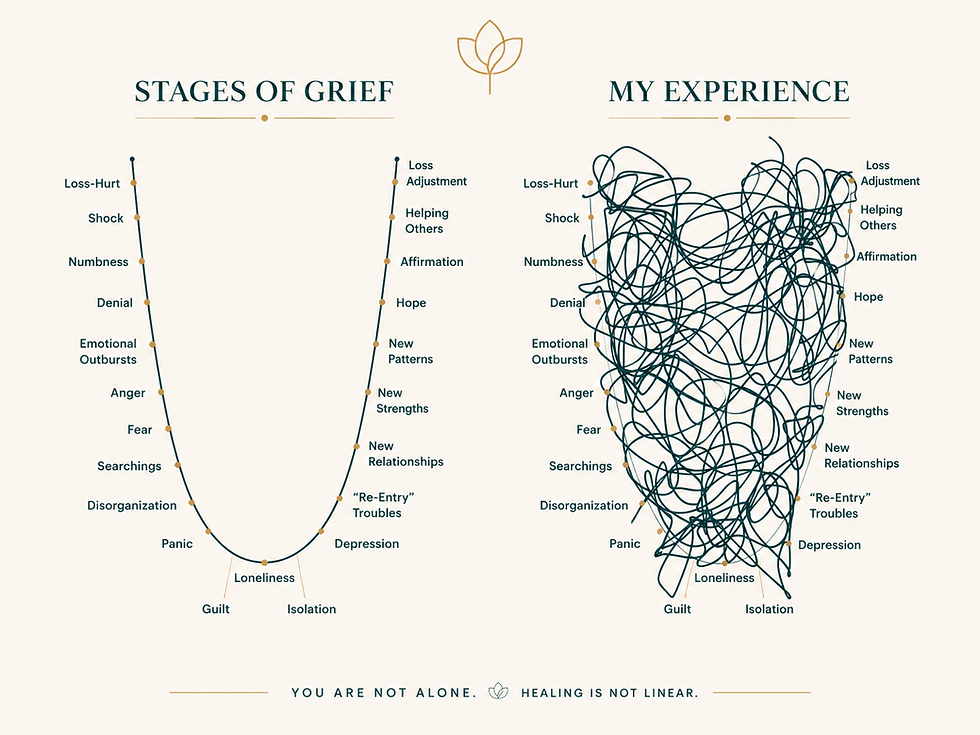
When you work with someone who truly understands grief, you're not just getting coping strategies. You're getting:
Permission to feel everything without judgment or timelines
Tools that honor your body, mind, and spirit not just talk therapy
A safe space to stay connected to your person in a new way
Support for moving forward with your grief, not away from it
What to Look for in a Grief Counselor
Finding grief support that actually helps starts with knowing what to look for. Here are the non-negotiables:
1. Specialization in Grief and Loss
General therapists can be helpful, but grief is a specialty. Look for counselors who:
List grief, bereavement, or loss as a primary focus
Have training in grief-specific modalities (like EMDR, Brainspotting, or EFT)
Work regularly with clients navigating loss
2. A Holistic or Integrative Approach
If you're drawn to healing that goes beyond talk therapy, ask if they incorporate:
Energy work (like Reiki or sound therapy)
Somatic practices (body-based healing)
Spiritual tools (meditation, rituals, or connection practices)
Not every counselor needs to offer all of these, but openness to holistic modalities can make all the difference.
3. They Don't Pathologize Your Grief
Grief isn't a mental health disorder. It's a human response to love and loss.
The right grief counselor will:
Acknowledge and normalize your emotions (even those messy, "inappropriate" ones)
Avoid labeling your grief as depression unless it's clinically appropriate
Understand that exhaustion, brain fog, and numbness are grief responses, not signs that you're broken
4. They Honor Continuing Bonds
Many outdated grief models push "letting go." But modern grief work recognizes that you don't have to detach from your person to heal.
Ask potential counselors:
"Do you support clients in staying connected to their deceased loved ones?"
"How do you approach dreams, signs, or spiritual experiences related to grief?"
If they dismiss or pathologize your desire for connection, they're not the right fit.
5. They Respect Your Timeline
No one should tell you it's been "long enough."
The right counselor will:
Let you move at your own pace
Never rush you toward "acceptance" or "moving on"
Understand that grief ebbs and flows for years (or a lifetime)
Questions to Ask Before You Commit
Don't be afraid to interview potential grief counselors. This is your healing, and you deserve to feel confident in your choice.
Here are some questions to ask during your first call or session:
"What's your approach to grief counseling?" Listen for answers that honor individuality, not rigid stages.
"Do you believe grief has a timeline?" If they say yes, keep looking.
"How do you feel about clients staying connected to their deceased loved ones?" You want someone who supports continuing bonds, not detachment.
"Do you incorporate holistic or spiritual practices?" If that matters to you, make sure they're open to it.
"What's your experience working with [your specific type of loss]?"Whether you're a widow, a parent who lost a child, or navigating traumatic loss, specialization could matter.
"How do you handle clients who feel stuck or numb?" You want a counselor who sees numbness as a valid grief response, not resistance.
Red Flags to Watch For
Not every counselor is the right fit. Here's when to walk away:
They set timelines for your healing. ("You should be feeling better by now.")
They avoid mentioning your person. (As if saying their name will hurt you.)
They push "closure" or "moving on." (Grief doesn't end. It transforms.)
They pathologize normal grief responses. (Calling exhaustion "depression" without nuance.)
They dismiss spiritual experiences. (Dreams, signs, or sensing presence.)
They focus only on their discomfort. ("I just hate seeing you like this.")
If something feels off, trust your gut. You deserve a counselor who holds space for all of you.
Where to Find Grief Counselors
Here are some places to start your search for grief counseling:
Psychology Today's Therapist Directory: Filter by "grief" and location in which you would like to receive therapy
GoodTherapy.org: Search for grief specialists
The Dougy Center: Resources for grief support (especially for children and families)
Local hospice organizations: Many offer free or low-cost grief counseling
Online therapy platforms: BetterHelp, Talkspace (filter by grief specialization)
Grief-specific coaching: If traditional therapy isn't your fit, consider grief coaches who blend counseling with holistic tools; however, if there is a medical necessity to what you're looking for, then good ethical coach should convey that

What If Traditional Counseling Isn't Enough?
Sometimes, talk therapy alone doesn't reach the places where grief lives.
That's when holistic grief support can come in. Modalities include:
EFT/Tapping (emotional release)
Brainspotting (trauma processing)
SoulCollage (creative expression)
Sound therapy (nervous system regulation)
These can work alongside or instead of traditional counseling to support your healing.
If you're drawn to this kind of work, look for counselors or coaches who integrate these tools into their practice.
You Deserve Grief Support That Honors You
Finding the right grief counselor isn't about finding someone who will "fix" you. It's about finding someone who will witness you, exactly as you are.
It is someone who won't rush your tears or silence your longing. Someone who understands that grief and joy can co-exist. Someone who sees your love as something sacred, not something to "get over."
You don't have to carry this alone. The right grief help is out there, and you're allowed to be picky until you find it.
Because your grief deserves to be honored.
And so do you.
How Grief Counseling Actually Works
If you've never worked with a grief counselor before, you might wonder what to expect. Here's what the process typically looks like:
Initial Consultation
Most grief counselors offer a free or low-cost consultation. This is your chance to ask questions, share your story briefly, and get a feel for their approach.
You're not committing to anything yet. You're simply exploring whether this person feels like a good fit. As previously mentioned, ask questions. You are allowed to let them know that you would get back to them if you feel you need to think about it or if you want to see what other grief counselors might offer.
Building Safety First
In early sessions, a good grief counselor won't dive straight into "processing" your loss. They'll help you feel safe first.
This might include:
Learning grounding techniques
Understanding your nervous system responses
Creating rituals or practices that bring comfort
Identifying what support looks like for you
Honoring Your Grief
As trust builds, you'll have space to express whatever you're feeling without judgment.
Rage. Numbness. Guilt. Longing. All of it is welcome.
The counselor's role isn't to fix these emotions. It's to help you hold them without collapsing under their weight.
Exploring Connection
If you're open to it, many grief counselors will help you explore ways to stay connected to your person that would resonate with your belief system.
This might include:
Writing letters to them
Creating rituals or altars
Exploring dreams or signs
Learning to sense their presence in new ways
Moving Forward and Not On
Over time, the focus will shift from surviving to living again.
Not because you've "gotten over" your loss. But because you've learned to carry your grief differently.
You'll explore questions like:
Who am I now?
What brings me meaning?
How do I honor my person while also honoring my own life?
This isn't about replacing what you lost. It's about integrating it into who you're becoming.
How Long Does Grief Counseling Take?
There's no standard timeline for grief counseling, and that's actually a good thing.
Some people work with a grief counselor for a few months. Others stay for a year or longer. Some return periodically during difficult anniversaries or transitions.
The right counselor will never pressure you to "graduate" before you're ready. They'll let you move at your own pace and return whenever you need support.
What If You Can't Afford Grief Counseling?
Cost shouldn't keep you from getting help. Here are some options if finances are tight:
Sliding scale counselors: Many therapists offer reduced rates based on income
Hospice grief programs: Often free or low-cost, even if your person didn't use hospice services
Support groups: Free peer-led or professionally facilitated groups
Online communities: Grief-specific forums and social media groups
Employee Assistance Programs (EAP): Check if your employer offers free counseling sessions
Graduate training clinics: Universities with counseling programs often offer low-cost services with supervised students
Don't let cost stop you from reaching out. There are resources available.
The Difference Between Grief Counseling and Grief Coaching
You might have noticed the terms "grief counselor" and "grief coach."
Here's what sets them apart:
Grief Counseling

Provided by licensed mental health professionals (therapists, counselors, psychologists)
Can diagnose and treat mental health conditions
Often covered by insurance
Focuses on clinical interventions and therapeutic techniques
Grief Coaching
Provided by trained coaches (not always licensed therapists)
Focuses on moving forward, finding purpose, and personal growth
Typically not covered by insurance
Often integrates holistic modalities like energy work, spiritual practices, and creative expression
Both are valuable. The right choice depends on your needs.
If you're experiencing severe depression, anxiety, or trauma symptoms, start with a licensed grief counselor. If you're looking for holistic support, spiritual integration, or help rebuilding your life, a grief coach might be a better fit.
Many people work with both at different stages of their journey (and you can actually work with them simultaneously).
When to Seek Grief Support
There's a common myth that you should wait six months before seeing a grief counselor. That's not true.
You can reach out for grief help at any point:
Immediately after loss: Early support can help you navigate shock, practical decisions, and acute grief
Weeks or months later: When the initial support fades and the reality sets in
Years after loss: When you realize you've been surviving, not living
During transitions: New relationships, moves, career changes, or anniversaries can reactivate grief
There's no "right time" to seek support. The right time is whenever you feel ready.
What Makes Grief Counseling Different from Regular Therapy
While any good therapist should be able to support you through loss, grief-specialized counseling offers something different:
Grief Counselors Understand the Physiology of Loss
They know that grief isn't just emotional. It's a whole-body experience that affects:
Sleep patterns
Appetite
Concentration
Physical pain
Immune function
They won't just address your feelings. They'll help you understand what's happening in your nervous system and body.
They Normalize the "Weird" Parts
Grief counselors won't be surprised when you tell them about:
Seeing your person out of the corner of your eye
Talking to them out loud
Feeling their presence
Experiencing vivid dreams
Having moments of joy followed by crushing guilt
They know these experiences are common, not signs that something's wrong with you.

They Don't Rush Milestones
General therapists might inadvertently push you toward "progress" markers like dating again, clearing out belongings, or "finding closure."
Grief counselors understand that these milestones happen on your timeline, not theirs.
They Honor the Continuing Bond
Modern grief counseling recognizes that healthy grieving doesn't mean cutting ties with your person. It means finding new ways to maintain connection while also living your life.
How to Know If Your Grief Counselor Is the Right Fit
Even after you start working with someone, pay attention to how you feel. Here are signs you've found the right grief counselor:
You feel safe enough to be honest. You don't have to perform or pretend you're doing better than you are.
They remember details about your person. They ask about them by name and show genuine interest in who they were.
You leave sessions feeling lighter, not heavier. Even hard sessions should leave you feeling held, not drained.
They validate your experience. They don't compare your grief to others or minimize what you're going through.
You feel seen, not diagnosed. They treat you as a whole person, not a collection of symptoms.
They respect your pace. They never push you to talk about things you're not ready to address.
You feel permission to grieve your way. They support your unique process, even if it doesn't look "typical."
If you're not experiencing these things after a few sessions, it's okay to keep looking.
What to Do If Your Current Counselor Isn't the Right Fit
Ending a therapeutic relationship can feel awkward, but it's your right.
Here's how to transition:
Trust your instincts. If something feels off, it probably is. You don't owe anyone an explanation.
Be honest (if you're comfortable). You can say something like: "I appreciate your support, but I don't think this is the right fit for me right now."
Ask for referrals. A good counselor will understand and might even help you find someone better suited to your needs.
Don't give up. One wrong fit doesn't mean counseling won't work for you. It just means you haven't found your person yet.
Finding the right grief counselor is like finding the right doctor. Sometimes it takes a few tries.
What to Expect in Your First Grief Counseling Session
Walking into your first session can feel intimidating. Here's what typically happens:

Paperwork and Logistics
You'll likely fill out intake forms covering:
Basic contact information
Medical and mental health history
Current medications
Emergency contacts
Insurance information (if applicable)
This is standard practice and helps your counselor understand your full picture.
Getting to Know Each Other
Your counselor will introduce themselves and explain how they work. This is your chance to ask questions about:
Their experience with grief
Their approach and methods
Session frequency and duration
Confidentiality policies
Sharing Your Story At Your Pace
You'll have space to share as much or as little as you're ready to talk about. Your counselor might ask:
What brought you in today?
Tell me about your person.
What's been hardest for you?
What kind of support are you looking for?
You don't have to share everything in the first session. There's no pressure to dive deep before you feel safe.
Establishing Goals Loosely
Your counselor might ask what you're hoping to get from counseling. It's okay if you don't have clear answers. "I just need help" is a perfectly valid response.
Next Steps
Before you leave, you'll typically:
Schedule your next session
Discuss frequency (weekly, biweekly, etc.)
Receive any resources or practices to try between sessions
Remember, the first session is as much for you to evaluate them as it is for them to understand you.
Common Myths About Grief Counseling
Let's clear up some misconceptions that might be holding you back from seeking help:
Myth 1 "I should be able to handle this on my own"
Truth: Grief is one of the most intense experiences a human can go through. Asking for help isn't weakness. It's wisdom.
Myth 2 "Counseling means I'm broken"
Truth: Counseling means you're brave enough to face your pain with support. That takes strength, not brokenness.
Myth 3 "They'll just tell me to move on"
Truth: A good grief counselor will never tell you to move on. They'll help you move forward while keeping your person with you.
Myth 4 "I have to wait until I'm really struggling"
Truth: You don't have to be in crisis to benefit from support. Early intervention can actually prevent deeper struggles later.
Myth 5 "Talking about it will make it worse"
Truth: Holding grief in often makes it heavier. Speaking it out loud in a safe space can bring relief.
Myth 6 "I need to have it together before I go"
Truth: You can show up exactly as you are. Messy, exhausted, numb, angry. All of it is welcome.
How to Prepare for Your First Grief Counseling Session
You don't need to do anything special, but these tips might help you feel more comfortable:

Write down what you want to say If you're worried about forgetting things or getting overwhelmed, jot down a few notes beforehand.
Bring a photo (if you want) Some people find it helpful to have a picture of their person with them.
Dress comfortably You'll be sitting for 45-60 minutes. Wear whatever helps you feel at ease.
Arrive a few minutes early Give yourself time to settle in and take a few deep breaths.
Bring tissues Crying is normal and expected. Most offices have them, but having your own can feel comforting.
Lower your expectations You don't have to have a breakthrough in the first session. Just showing up is enough.
What If You're Not Ready for One-on-One Counseling?
Individual counseling isn't the only option. Here are other ways to find grief support:
Grief Support Groups
Peer-led or professionally facilitated groups offer:
Connection with others who understand
Shared experiences and validation
Lower cost (often free)


Jaclyn Hoffman is the founder of both Shore Awakenings & Soulful Journeys, two healing spaces where those touched by grief come to feel seen, supported, and empowered to live fully again. As a licensed counselor and grief coach, she blends evidence-based practice with heart-centered guidance. Join her community at www.jaclynhoffman.com
For Informational and Educational Purposes Only.
The content published on the Shore Awakenings & Soulful Journeys blog is intended for general informational and educational purposes only. All articles, posts, guides, and resources are written to offer support, insight, and encouragement to those navigating grief and life after loss and do not constitute professional mental health advice, diagnosis, or treatment.


Comments